
What to Check on Your Sprinklers in October
Rain in Los Angeles is mostly a rumor until December. Downtown averages just over half an inch in October and under an inch in November, then close to two and a half in December. So most lawns go into fall on the schedule they ran in July, while the days get shorter and the grass needs less.
In fall, sprinkler trouble usually shows up as a water bill or one strange patch of lawn. You can sort out much of that yourself with the controller, a screwdriver and a walk around the yard. October is the month for it, before the first storm and before the clocks change.
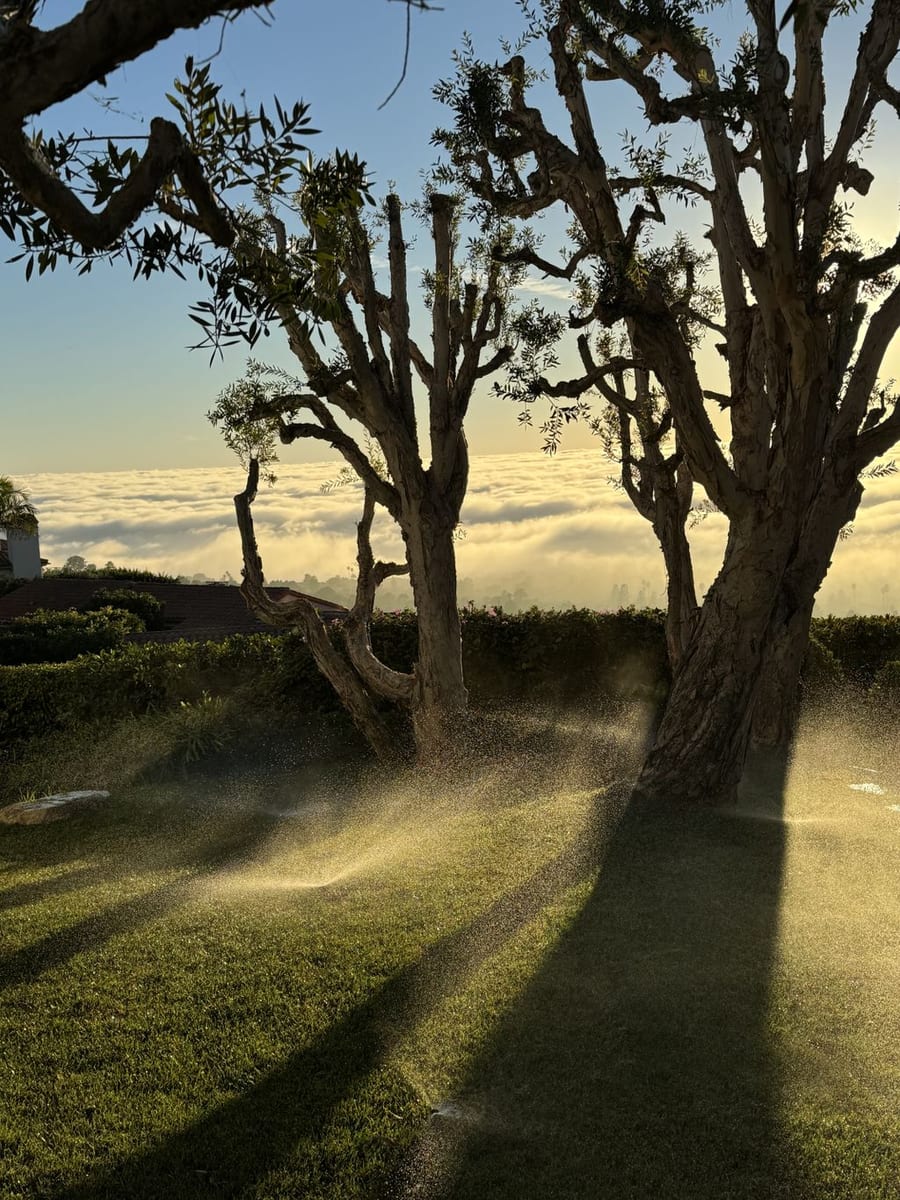
Sprinklers running across a lawn under two trees, with a layer of cloud lying below.
Set the controller for fall
Most controllers have a seasonal adjust, sometimes labeled water budget, that turns every zone up or down by a percentage at once. Bring it down a step at a time and watch the lawn for a week or two.
Then check the days and hours. LADWP customers with odd street numbers water Monday, Wednesday and Friday, even numbers Sunday, Tuesday and Thursday, and nothing runs between 9 a.m. and 4 p.m. Santa Monica runs its own water system and sets its own rules. There it's Monday and Wednesday for odd addresses, Tuesday and Thursday for even, and nothing between 9 and 5. Anywhere else, check your water provider's current days.
Daylight saving time ends on November 1. If your controller doesn't reset its own clock, it'll run an hour early all winter. In Santa Monica that turns a 5:15 evening start into 4:15, inside the hours you aren't allowed to water.
Run each zone and walk it
Turn each zone on by hand from the controller and walk along while it runs. It's the only way to see what the schedule does at 5 in the morning.
A geyser, water shooting straight up with no pattern, is a broken head or a cracked riser, the short pipe the head screws onto. Mowers and car tires cause most of them. A head at grade unscrews by hand, and a matching one screws on.
A soggy spot that stays wet days after the zone ran usually means a cracked lateral line, the buried pipe from the valve out to the heads. Heads on that zone that barely pop up point the same way.
Dry patches and brown stripes are more often one head than a dead zone. Sand blocks the nozzle, or the head got knocked and now waters the fence. After a dry Santa Ana week those stripes show up fast.
Water running down the sidewalk is runoff, and that's against the rules for LADWP and Santa Monica customers alike. Turn the head or narrow its arc.
Clearing a clogged nozzle
Turn the zone off. Pull the pop-up stem up with pliers, hold it and unscrew the nozzle. Under it sits a small filter screen. Rinse both and clear the slot in the nozzle with a toothpick, not a nail. With the nozzle still off, run the zone for a few seconds to flush grit out of the riser, then put it back together.
If it sputters again within a week, the grit is coming from upstream, often a broken line.
Check the valves
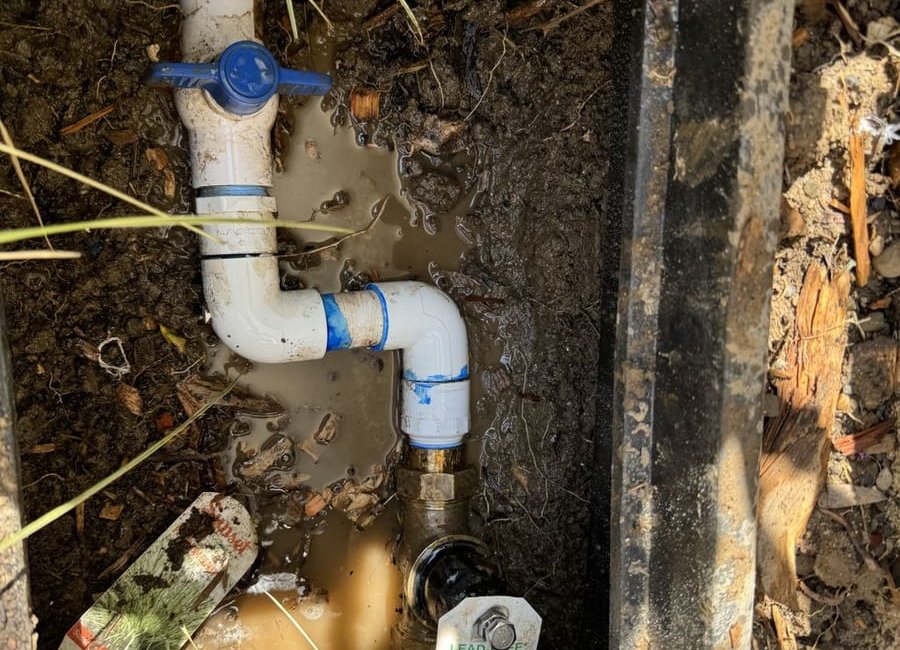
The valves are where each zone starts and stops. Some stand above ground by the house, others sit in a green plastic box. With every zone off, look for water around the top of each valve and standing in the box.
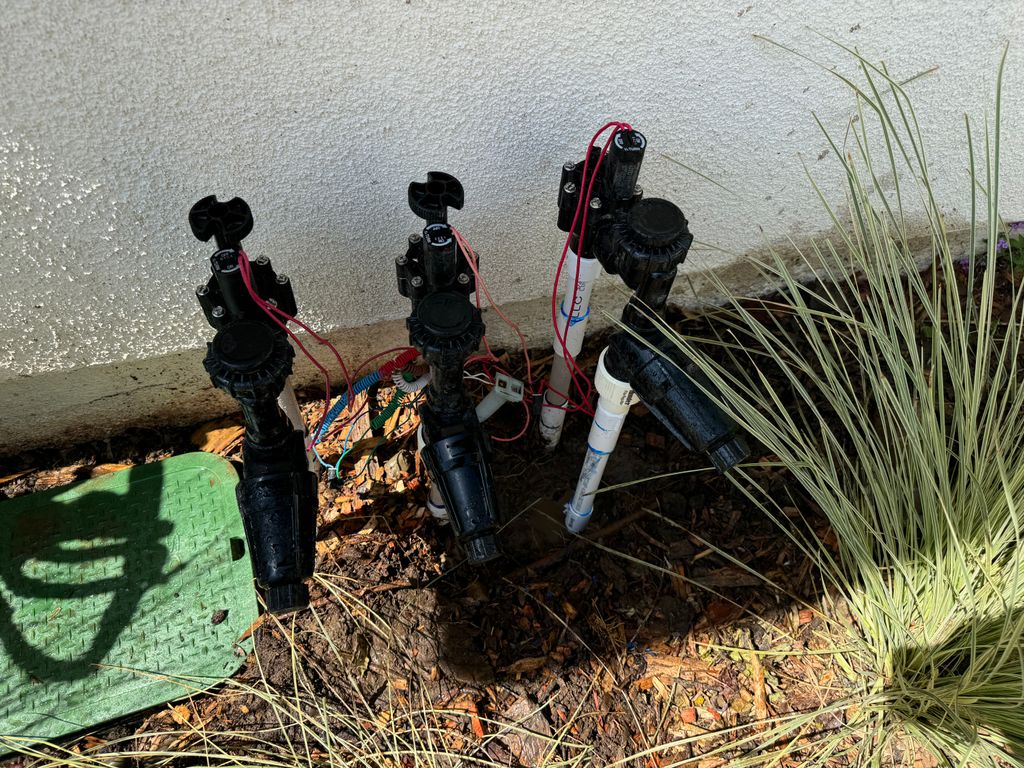
A little dribble is normal. When a zone shuts off, the lowest head on it often weeps for a few minutes while the pipe drains. A valve that won't close keeps its zone running weakly long after the controller stopped, and the lawn is wet in the morning on a day nothing was scheduled.
Try two things first. Most valves have a small bleed screw or lever for opening them by hand, and one left a quarter turn open keeps the valve running. Then check that the solenoid, the black cylinder on top with two wires, is snug by hand. If the zone still runs, shut the irrigation off at its own supply valve if you have one, or at the house main, until the valve gets fixed.
Turn it off when it rains
Sprinklers on a soaked lawn send the water straight into the gutter, and both LADWP and Santa Monica count that as runoff. Most controllers have a rain delay or rain off setting that pauses the schedule without erasing it. Use it after every real storm.
Where it stops being a Saturday job
Heads, nozzles, arcs and the schedule are yours. A cracked lateral is a different job, because it means finding the break under the lawn, digging to it and gluing in a new section. A valve that still won't close after the bleed screw and the solenoid needs a new diaphragm or a new valve. And when several zones quit at the same moment, suspect the controller or a shared wire before blaming every valve. That takes a meter to sort out.
Those are ordinary repairs. The water meter and the backflow device belong to a plumber, and so does a leak on the main line, the kind where the meter keeps turning with every zone off.
Whatever you find, write it down by zone and head before you call anyone or drive to the hardware store. "Zone 3, second head from the gate, sprays the wall" saves an hour of walking the yard.
Rather hand it over?
Tell us the job and your ZIP. You get one flat price to approve before anything starts.
Get an estimateRead next
What sprinkler & irrigation repair costs in Los Angeles, and the guide that picks up where this one stops.
What sprinkler & irrigation repair costs in Los Angeles
Most jobs land between $120 and $450. Digging is what costs you here.
See the price breakdown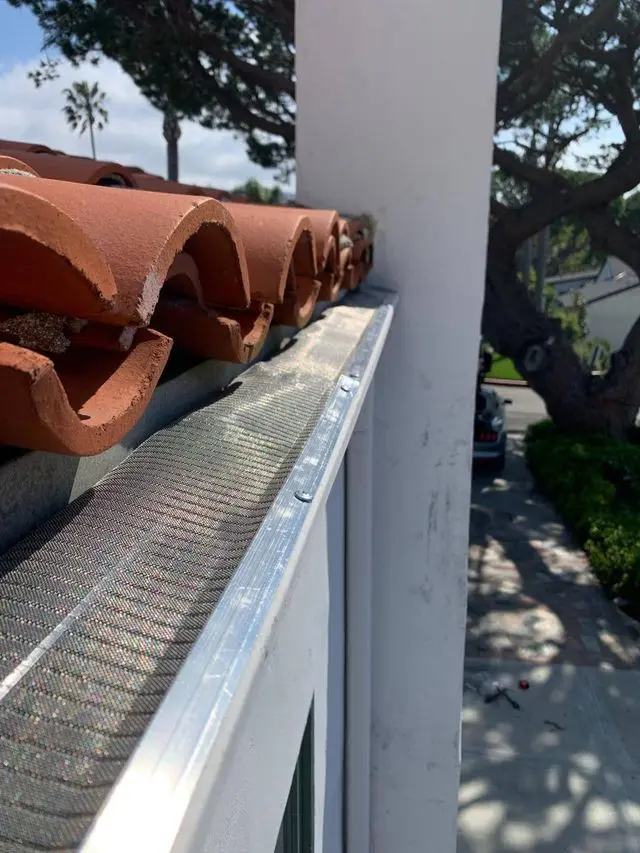
Five Things to Check on Your House Before the First Rain
The rest of the October walk around the house, with gutters, roof joints and fence posts.
Read the guideMore DIY guides
A head that's wet the same deck corner every morning for years has usually left soft boards behind it.
You can diagnose a blocked gutter from the ground in about ten minutes.
Every guide we have written, and the point in each job where it is worth handing over.
Get the next guide by email
New how-to guides and the seasonal checklist for LA houses. No sales emails.
We'll only use your email for the guides.