
Five Things to Check on Your House Before the First Rain
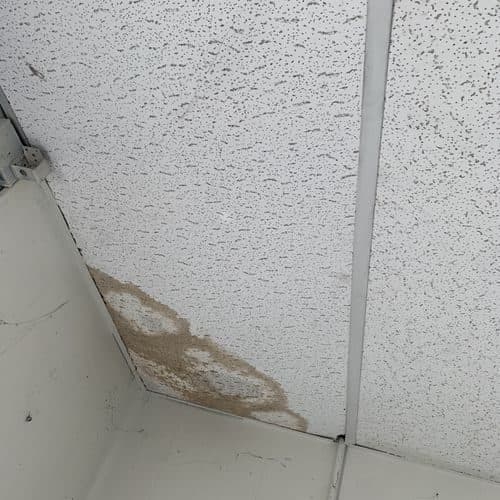
Rain here is late, and that's the problem with it. By the time the first real storm arrives in late November, most of us have gone seven months without looking at the roof, and the small thing that was an hour of work in October has become a stain on the ceiling in January.
I run a handyman crew in Santa Monica. Once the rain starts the calls arrive in a fairly predictable order: leaks first, then doors that won't close, then fence posts. Most of it is preventable on a dry afternoon. Here's what's worth walking around and looking at this month.
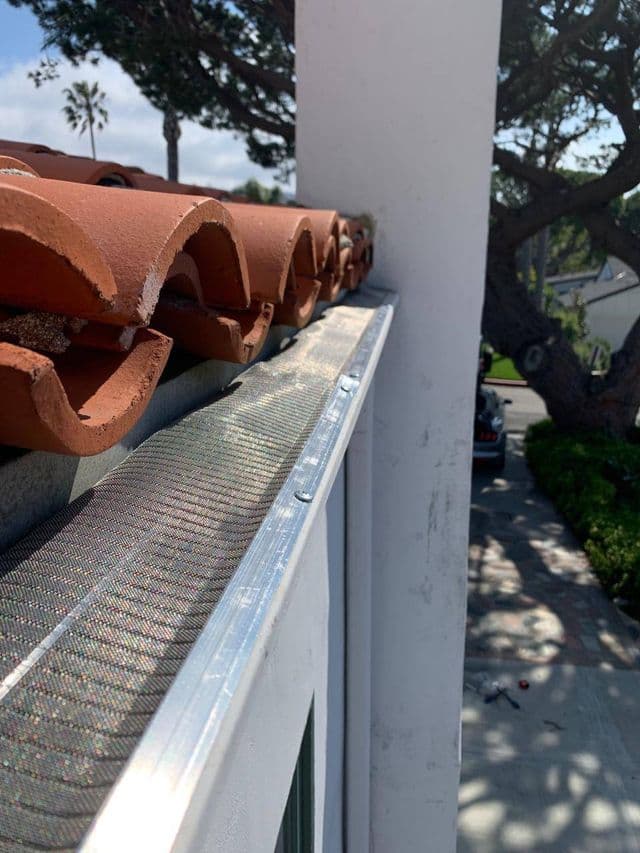
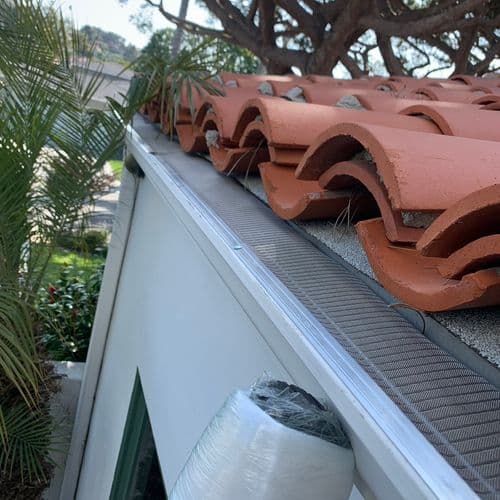
Mesh gutter guard fitted along the edge of a clay tile roof.
1. The gutters, and the board behind them
Everyone knows to clear the leaves. Fewer people look at the fascia, the board the gutter is nailed to. Stand underneath and look up at where it attaches. If that board is soft, stained, or pulling away, the gutter has been spilling behind itself for a while, and clearing the leaves won't fix it.
Then follow the water down. A downspout that ends at the corner of the house is watering your foundation every time it rains. A cheap plastic extension moves it away.
One order-of-work note. If you're doing gutters and a pressure wash the same season, gutters go first, or you'll wash the walkway twice.
2. Where the roof meets everything else
Stay off the roof. You can see what matters from the ground with binoculars, or from an upstairs window.
Look at the joints rather than the field of the roof: where it meets a wall, around the chimney, around vents and skylights. That's where almost every leak we've repaired actually started. Flat roofs and the low slopes over an addition or a carport are the usual suspects around here.
Lifted or missing shingles matter too. Joints matter more.
3. Doors that already stick
A door that sticks in September won't close in January. Wood takes on moisture, and a frame that's slightly out of square gets worse once it's damp. Near the coast the marine layer starts that process months before the first storm does.
The fix is usually small. Plane the edge, move the strike plate, replace the weatherstripping that has gone flat and hard. Do it while the door still closes. A door that won't latch in the middle of a storm is a different job.
4. The fence, the deck, and anything sitting in soil
Push on your fence posts, one at a time. If a post moves, the wood below the soil line is already gone, and the first wet windy night will take it down. Do the same with the deck: walk it, and pay attention to anything spongy near the stairs or under a planter that's been in one spot for years.
Sealing helps wood that's still sound. Sealing rot just hides it until spring.
5. Outdoor outlets and anything electrical outside
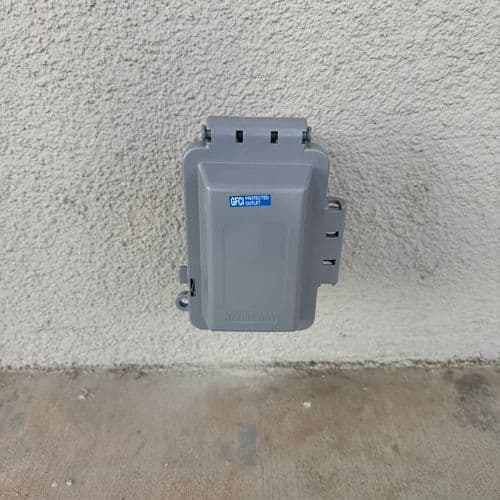
Check that outdoor outlets still have covers that close, and push the test and reset buttons on the GFCI to make sure it still trips. If you're hanging holiday lights in November, that's the circuit they're going on, and it will be wet.
While you're thinking about it: installers here fill early November by the middle of October. If someone else is hanging your lights, that's a decision for this month.
What the walk actually costs you
Nothing, if you do it yourself, and an afternoon if you fix the small stuff yourself.
The reason to do it now isn't that the work is hard. It's that by December every roofer and handyman in the city is booked, and the price of an emergency has never been the price of a scheduled job.
If something on the walk turns out to be bigger than an afternoon, have somebody come and look at it before the rain does. That goes for us and for everyone else.
Read next
What gutter cleaning costs in Los Angeles, and what moves a quote to the top of the range.
More DIY guides
You can diagnose a blocked gutter from the ground in about ten minutes.
A door that binds in January and swings fine in August has not warped.
Every guide we have written, and the point in each job where it is worth handing over.
Get the next guide by email
New how-to guides and the seasonal checklist for LA houses. No sales emails.
We'll only use your email for the guides.