
Repair or Replace? What to Check on Your Deck Boards
A deck in Los Angeles can go all summer without rain and still rot. Downtown averages less than a twentieth of an inch in July and again in August. Meanwhile the boards near the beach sit in fog most mornings in May and June, and the corner next to the lawn may get a sprinkler every morning of the year.
A deck problem usually starts with one soft board. The question behind it is always the same, whether that board is the whole problem or just the first one to show. You can answer most of that yourself with a screwdriver and a flashlight. October is a good time to do it, because the wood is about as dry as it gets all year, and anything still soft now is soft for a reason.
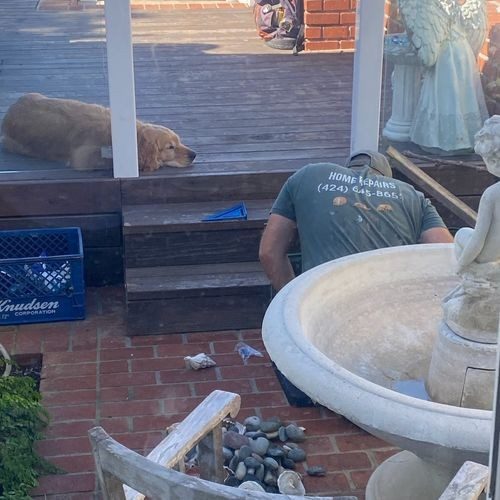
Deck steps beside a brick patio. The bottom tread sits closest to wet ground, so it's one of the first places to probe.
Start with a screwdriver
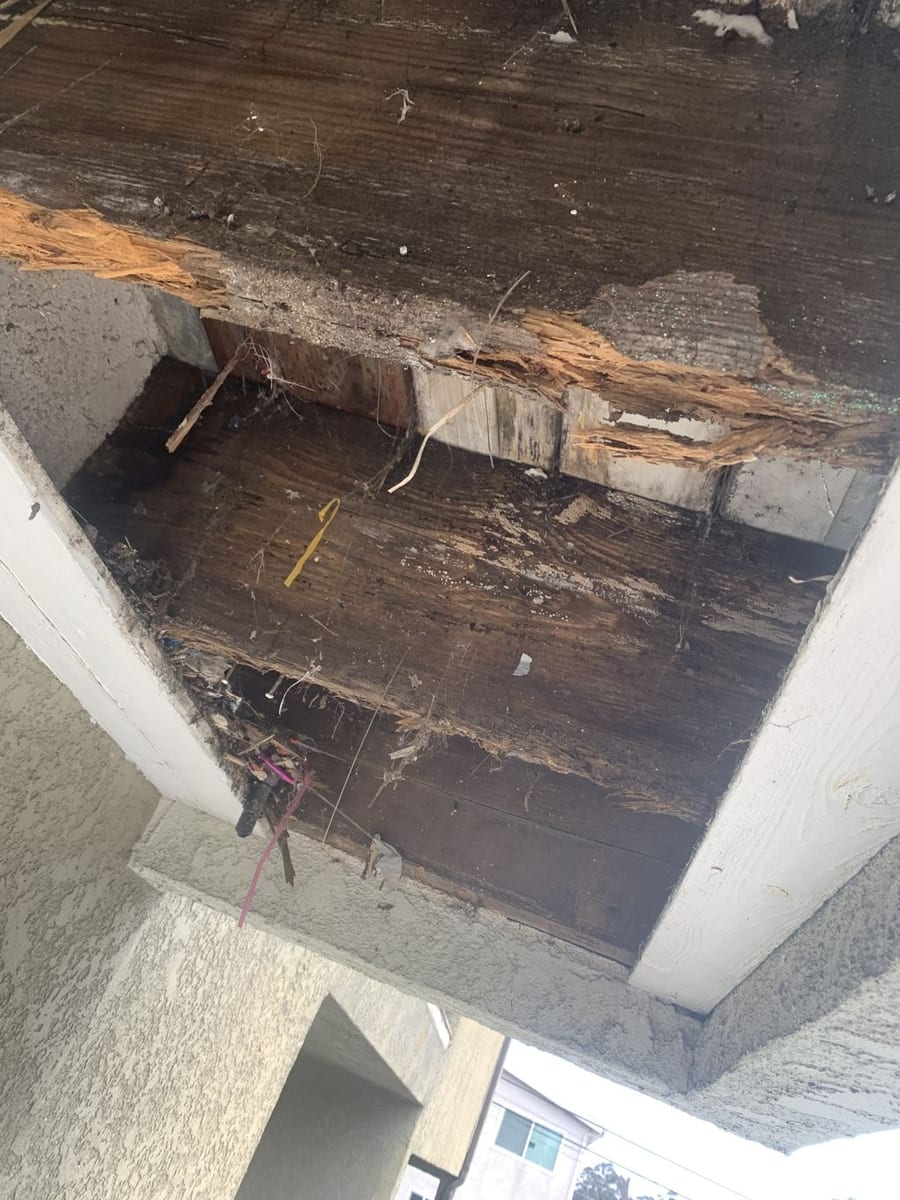
Press the tip of a flat screwdriver or an awl into the board, across the grain, near each end. Sound wood pushes back. Pry up a small sliver and it comes away long and stringy, with a crack you can hear.
Rotten wood lets the tip sink in. The sliver snaps off short, right at the tool, with no sound at all. The test finds rot before it shows on the surface.
Probe the ends of the boards first. End grain soaks up water, and the ends sit over a joist, where water collects between two pieces of wood that never quite dry. After that, do the boards around planters, under a hose bib, at the bottom of the stairs and anywhere a sprinkler reaches.
Look underneath, where the decision gets made
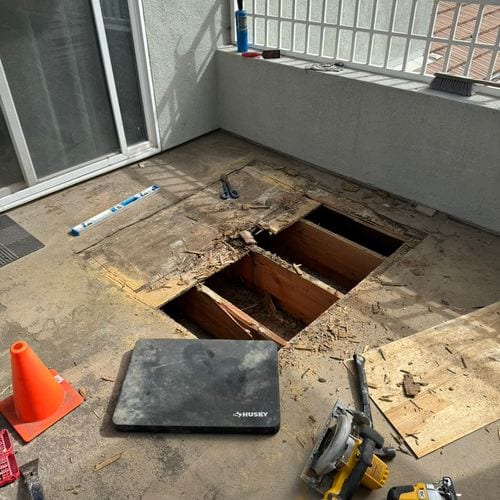
The board you stand on matters less than the joist it sits on. Joists are the boards set on edge under the decking, the ones that carry it. Shine a flashlight under a low deck, or stand under a raised one, and probe the joists below whatever felt soft on top. Then check the posts, right where they meet the ground or the concrete.
While you're down there, look for termites. Subterranean termites build shelter tubes, tunnels of dirt running up a post or a foundation, and the tubes are usually the first thing anyone sees. Drywood termites are common along the coast here and don't need soil at all. They push tiny pellets out of small holes, and each pellet has six flat sides. Either sign means a pest inspection comes before anybody replaces wood.
The nails and screws, especially near the beach
Salt air eats steel, and on the Westside it reaches well back from the beach.
Look for rust streaks running out from screw heads and for nails that have backed up above the surface. Popped nails are normal on an older deck, since the wood swells and shrinks around them every season. They come out and deck screws go in.
The hangers deserve more attention. Those are the metal brackets under the deck where each joist meets the beam. One that's flaking rust is still carrying a joist, so put it on the list you show whoever comes to look.
The railing is the part that can hurt someone
Grab the top rail next to a post and push hard, outward. It shouldn't move. A post that rocks usually has loose or rusted bolts where it meets the frame, and sometimes rot hiding behind them.
Then get a tape measure. Under the California Residential Code, a deck more than 30 inches above the ground within 3 feet of its edge needs a guard at least 42 inches high, and no gap in it should let a 4-inch ball through. Plenty of older decks have lower rails, and that may have been fine when they were built. It's still a fall risk if kids use the deck, and on a high deck I'd fix it before touching a single board.
Repair or replace
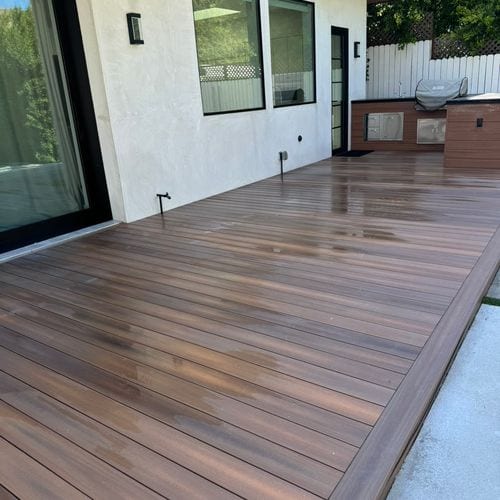
Soft spots in a few boards, with hard joists underneath, make it a board repair. The bad ones come out and new ones of the same width and thickness go in. They'll look lighter for a season until they weather or take stain.
It's a different job when you find soft wood across much of the deck, or the screwdriver sinks into a joist or a post. New decking screwed onto a failing frame lasts about as long as the frame does. That's framing work, and it's where a handyman crew like ours stops.
Composite decks follow the same rule. The boards swap out one at a time, but the frame under them is usually wood and rots the same way.
Before anyone replaces a board
Find out what's been wetting the soft corner. It could be a sprinkler head aimed at the deck, a downspout emptying next to it, or a planter that hasn't moved in five years. Fix the water and the new board lasts. Leave it, and you'll be probing that same corner again in a few years.
Rather hand it over?
Tell us the job and your ZIP. You get one flat price to approve before anything starts.
Get an estimateRead next
What deck repair costs in Los Angeles, and the guide that picks up where this one stops.
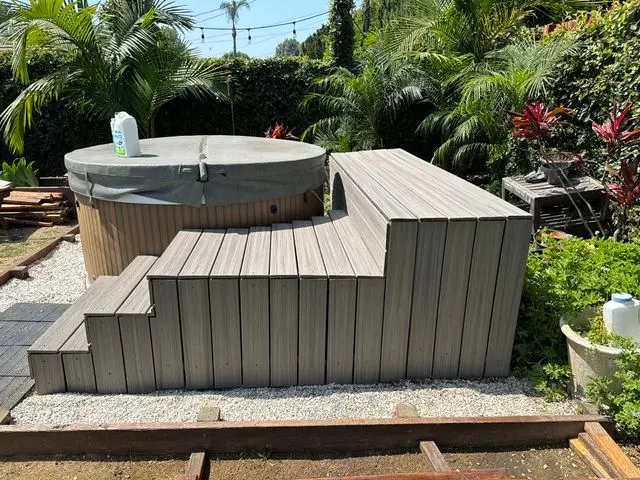
What deck repair costs in Los Angeles
Most jobs land between $250 and $1,200. Rot depth decides this.
See the price breakdown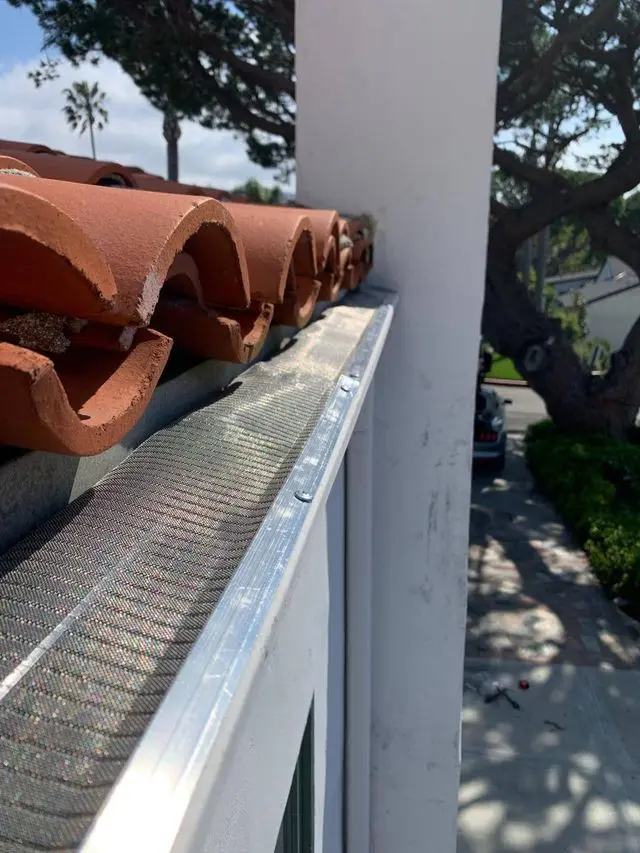
Five Things to Check on Your House Before the First Rain
The same walk around the yard, with fence posts, gutters and outdoor outlets added.
Read the guideMore DIY guides
You can diagnose a blocked gutter from the ground in about ten minutes.
A door that binds in January and swings fine in August has not warped.
Every guide we have written, and the point in each job where it is worth handing over.
Get the next guide by email
New how-to guides and the seasonal checklist for LA houses. No sales emails.
We'll only use your email for the guides.