
Before You Tile a Backsplash
A backsplash is the last thing to go on a kitchen wall and the only part anyone sees. How it looks in five years depends on what's behind it, the grease, the patches, the outlet boxes and where the first full tile lands.
On September 29 our crew finished one in Los Angeles, square teal tile behind a range and along a counter. The wall behind that range had stains and a fresh patch around the pot filler. If you want new tile up before the holidays, October is the month to look at your own wall. Most of the checking takes an evening with a flashlight and a straightedge.
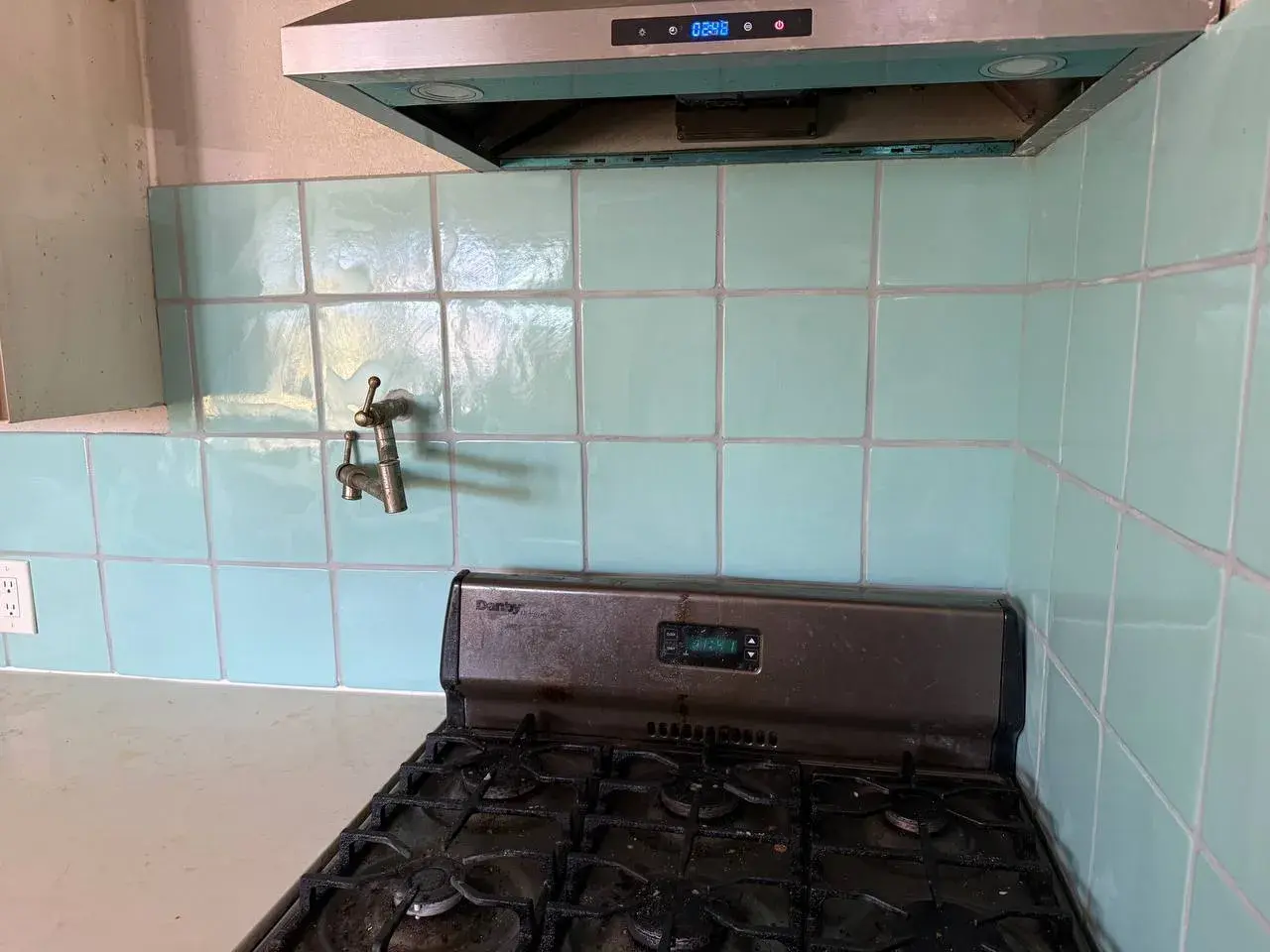
Square teal tile behind a range, up to the hood and around the pot filler, with the tile turning onto the side wall.
Is the wall ready for tile
Start behind the range. Cooking grease builds up there even where the wall looks clean, and thinset, the cement mortar tile is set in, won't bond to it. Scrub it with degreaser, rinse, and run a hand over it. If it still feels slick, it isn't done.
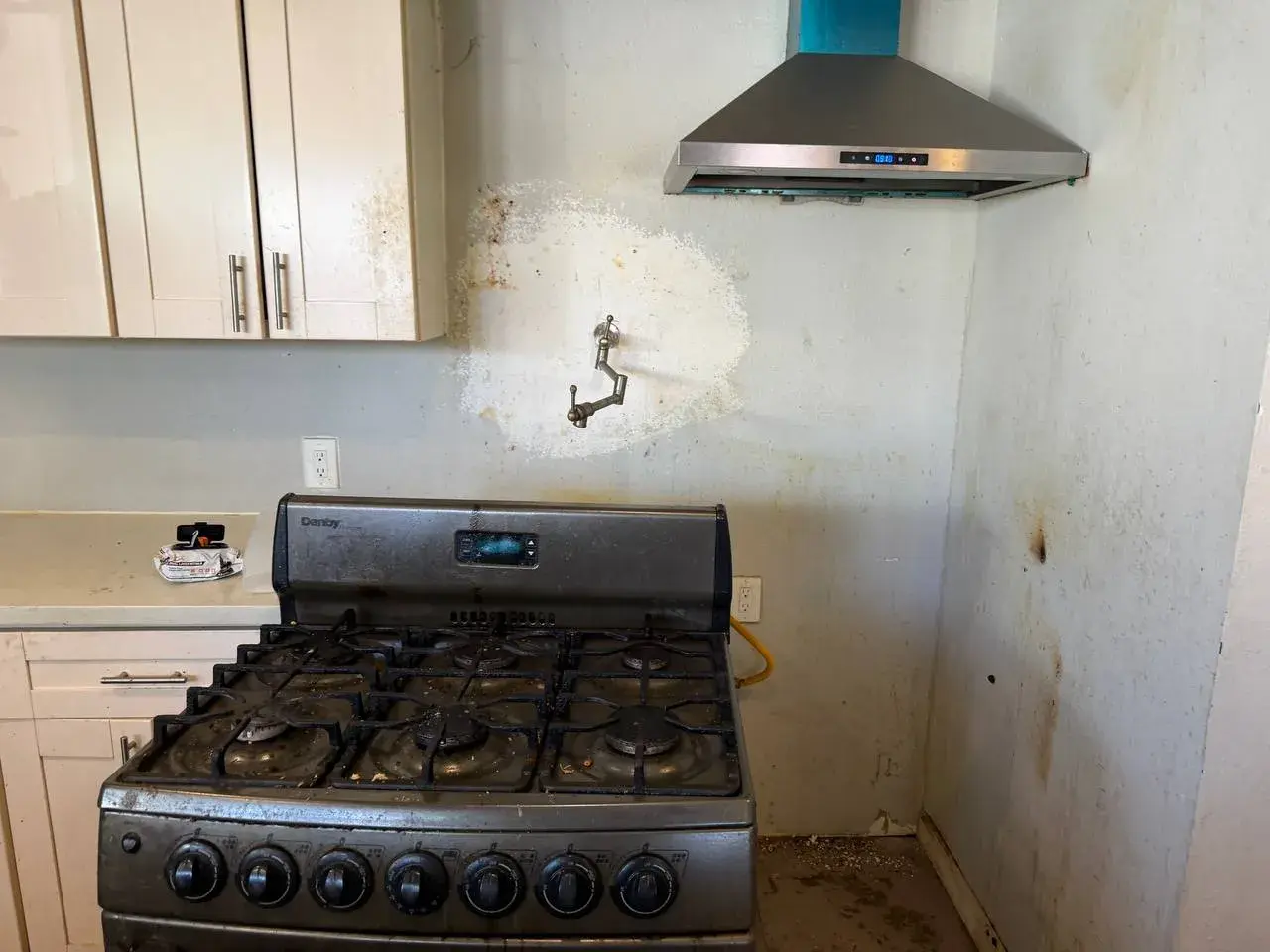
Glossy paint gets scuffed with sandpaper so the mortar has something to grip. Press painter's tape on it and pull. Paint that comes away with the tape comes off first. In a house built before 1978, test the paint for lead before anyone sands or scrapes. If old tile or peel-and-stick is coming down, expect torn drywall paper underneath that has to be patched flat.
Then slide a long level or a straight board along the wall. For tile under 15 inches, the Tile Council of North America's handbook allows a quarter inch of dip over 10 feet and a sixteenth over any one foot. Tile follows the wall, so high and low spots get fixed first. Anything 15 inches or longer on a side needs the wall twice as flat, which is why a 12-by-24 tile on an old wall usually means skim coating.
Drywall or plaster
Until the 1930s or 40s, nearly every house got plaster walls, not drywall. Plenty of kitchens in Santa Monica, Venice and the older parts of LA are that age. Plaster is harder than drywall, and a pushpin barely goes in.
Sound plaster takes tile fine. Plaster that has pulled away from the lath, the wood strips behind it, has to be fixed first. Press on it with a flat hand. If it gives or sounds hollow, it'll do the same under tile.
Outlets and switches in the tile
Tile and mortar add thickness, so a box that sat flush ends up behind the new surface. The National Electrical Code lets a box sit no more than a quarter inch back from a tile face (section 314.20), and the gap around it can't be wider than an eighth (314.21). Past that, it gets a box extender, a sleeve that brings the box out to the tile so the cover plate closes tight.
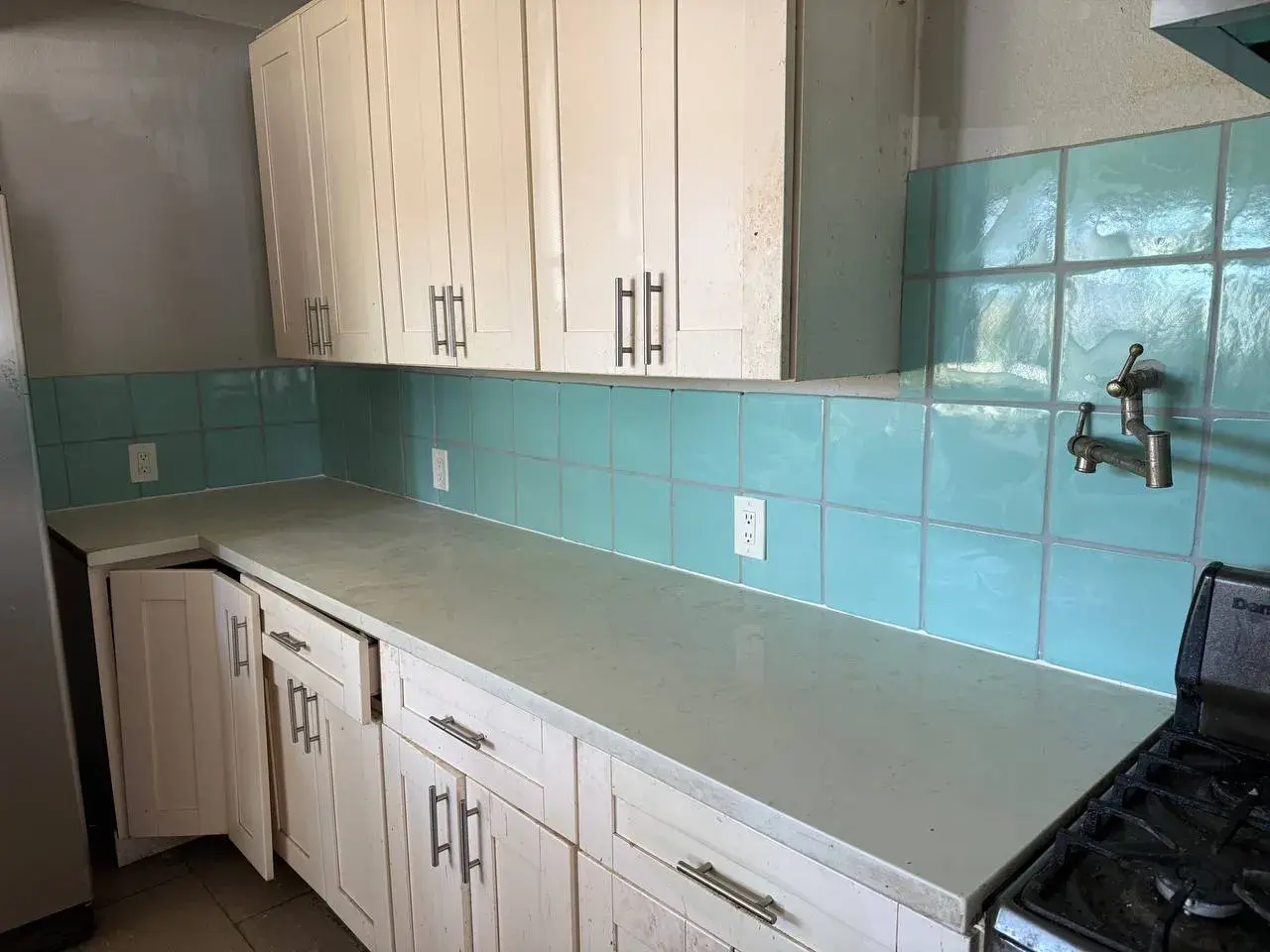
Outlets along a kitchen counter need GFCI protection. If yours don't have it, a new backsplash is a good time to add it. Moving an outlet, adding one or running a new circuit is an electrician's work, and in Santa Monica it takes a permit.
Lay it out around what doesn't move
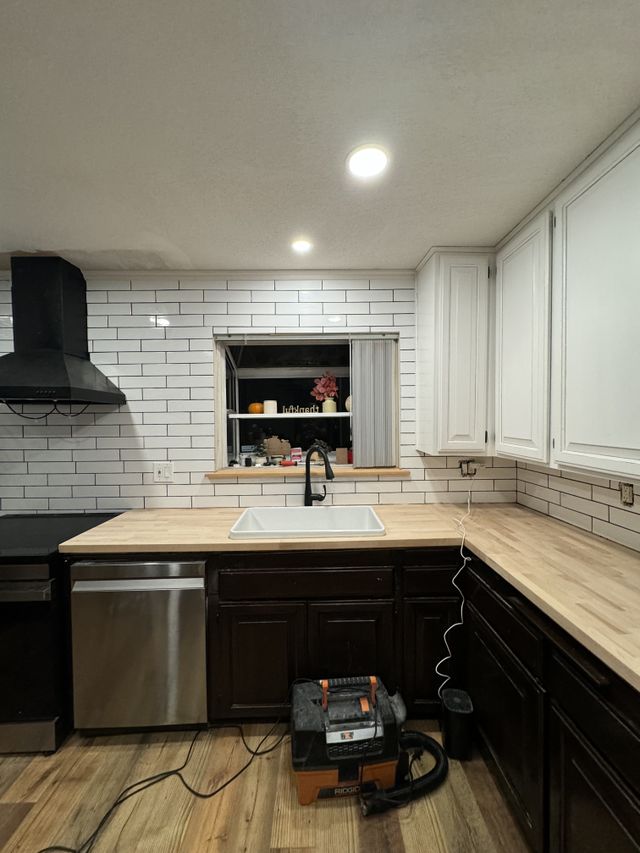
The range, the hood, the pot filler and the window stay where they are, so the pattern gets centered on whatever the eye lands on first, usually the range or the hood. That pushes the cut pieces into the corners. Counters are rarely dead level, so the bottom row gets cut to follow the counter while everything above runs off a level line. Dry-lay a row on the counter first.
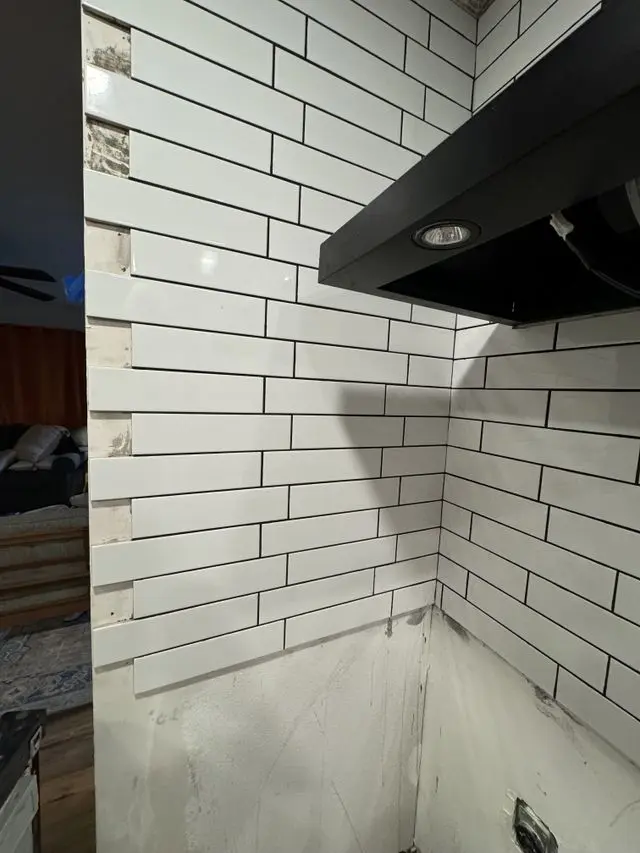
Check that the pot filler's pipe still sticks out far enough to take its trim once the tile is on, because moving it is a plumber's job. Over a range with no cabinets above, the tile needs its own stopping point. Carried up to the hood or to the ceiling, it looks planned. Around a window, it either wraps into the opening or stops at the trim.
Picking the tile
Glazed ceramic and porcelain don't need sealing. Natural stone does, and it gets sealed before grout goes in or the grout stains its face.
Joints an eighth of an inch or narrower get unsanded grout, which won't scratch glossy or polished tile. Wider joints, up to half an inch, get sanded. Where the tile meets the counter and at inside corners the joint moves, so it gets caulk instead.
How long it takes
Our teal job, 6-by-6 glazed tile behind the range and along the counter, took two days. That's typical for a kitchen, since grout waits for the mortar to set. The wet saw lives outside, so in a condo, check the building's work hours.
What you can do before anyone comes
Buy the tile with ten percent extra and clear the counters. If you're doing it yourself, square or subway tile on sound drywall is a fair first tile job. Patching, skim coating, box extenders and the tiling itself are the part we do. New outlets go to an electrician, and a moved pot filler to a plumber.
Before you buy any tile, put the straightedge on the wall behind the range. The grease, the patches and the pot filler all meet there, and that one spot tells you more about the job than the sample board does.
Rather hand it over?
Tell us the job and your ZIP. You get one flat price to approve before anything starts.
Get an estimateRead next
What backsplash installation costs in Los Angeles, and the guide that picks up where this one stops.
What backsplash installation costs in Los Angeles
Most jobs land between $300 and $900. Tile type sets the labor.
See the price breakdown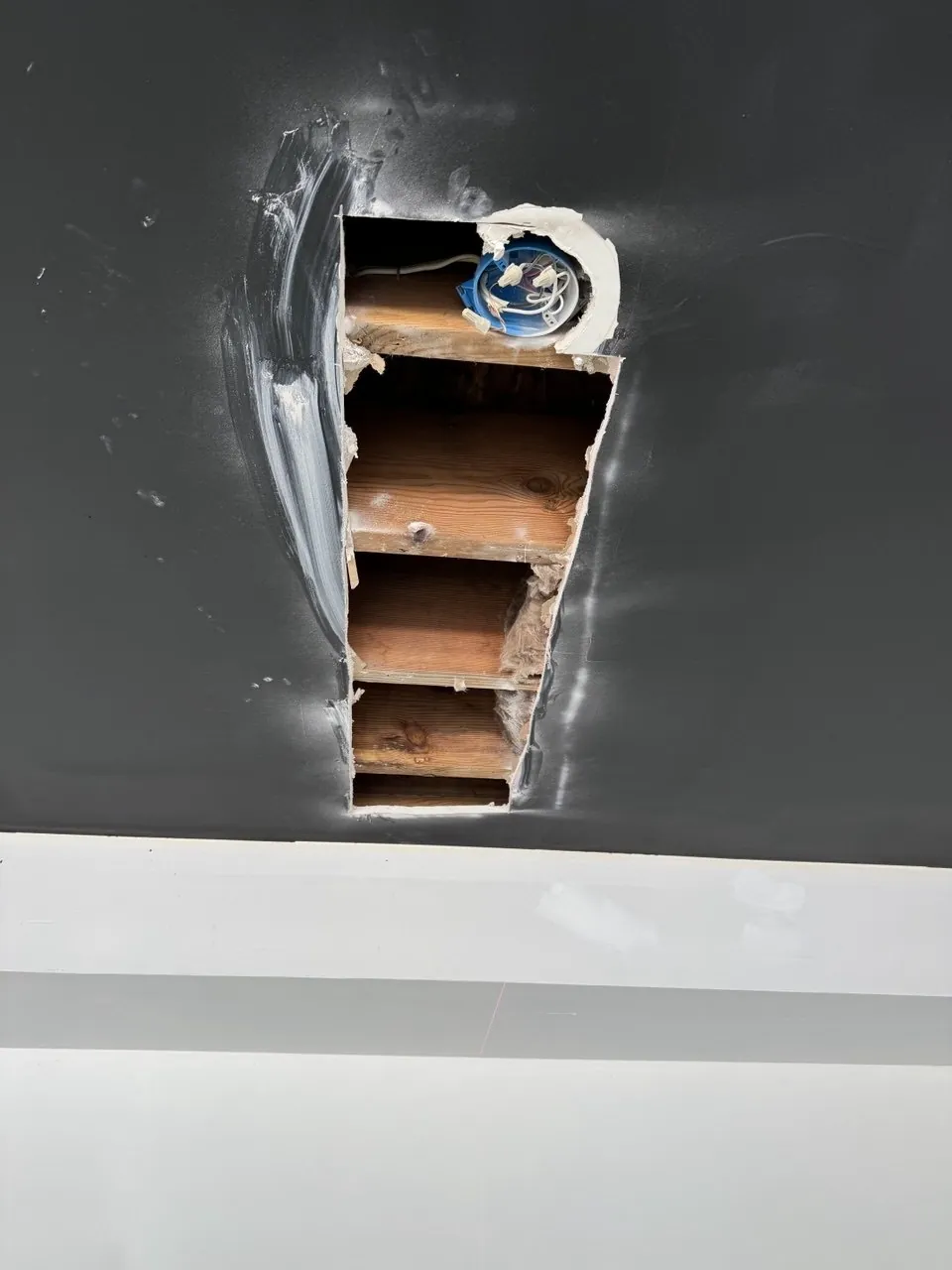
How to Fix a Drywall Hole
Old tile and peel-and-stick panels tear the drywall paper on the way off. Patching it flat is the same routine.
Read the guideMore DIY guides
Where the tile stops, how the window is finished and what happens behind the range are all things to settle before the first cut.
You can diagnose a blocked gutter from the ground in about ten minutes.
Every guide we have written, and the point in each job where it is worth handing over.
Get the next guide by email
New how-to guides and the seasonal checklist for LA houses. No sales emails.
We'll only use your email for the guides.