
How to Fix a Drywall Hole
From nail pops to a doorknob-sized hole, a patch done in thin coats leaves the wall looking like new.
Small holes get filled with spackle and sanded. Larger holes need a drywall patch, mesh tape, and joint compound built up in thin coats, then sanded, texture-matched, primed and painted.
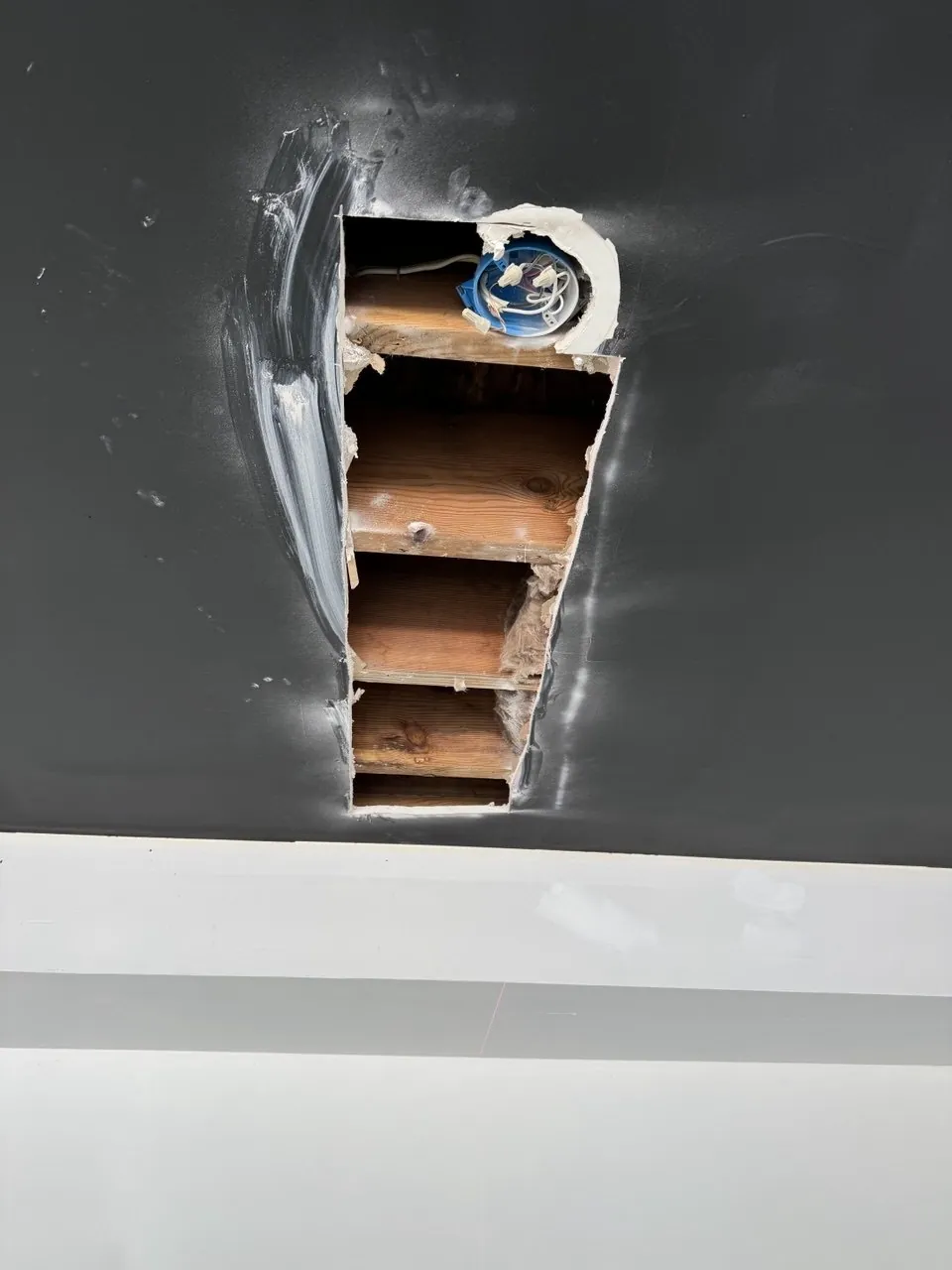
Our own work in Los Angeles. Not a photograph of the steps below.
Step by step
- 1Assess the hole
Nail and anchor holes up to about a half inch fill directly with spackle. Holes from a half inch to roughly 2 inches take a self-adhesive mesh patch, and anything bigger than a fist usually needs a cut-in drywall plug backed by furring strips. Also check why the hole happened. A doorknob hole gets a door stop at the same time, or you'll be patching again in a month.
- 2Small holes: fill
Press spackle firmly into the hole with a 2-inch putty knife, slightly overfilling, then draw the blade flat across to shave off the excess. Lightweight spackle dries in 30–60 minutes and shrinks a little, so plan on a quick second pass for anything deeper than a screw hole. Wipe the knife clean between passes. Dried crumbs drag lines through fresh fill.
- 3Large holes: patch & tape
For mid-size holes, center a self-adhesive mesh patch over the opening and press the edges down hard. For bigger holes, cut the opening into a clean square, screw a scrap of 1x3 inside the wall spanning the hole, then screw a matching drywall plug to it and mesh-tape the seams. Drive screws just below flush without breaking the paper face. A torn face will not hold.
- 4Apply joint compound
Spread the first coat of compound just thick enough to bury the mesh, using a 6-inch knife, and let it dry fully, typically overnight for anything beyond a skim. Add two more progressively wider coats with an 8- or 10-inch knife, feathering the edges 3–4 inches past the patch each time. Thin coats are the whole game: one thick coat cracks as it dries and takes days to cure.
- 5Sand & texture
Sand with a 150–220 grit sponge using light circular strokes, checking your work with a raking light held flat against the wall; it exposes ridges a straight-on look misses. Then match the existing texture: spray-can orange peel or knockdown for most LA walls, practiced on cardboard first to dial in the nozzle distance. Knockdown gets a light pass with a wide knife about 10–15 minutes after spraying.
- 6Prime & paint
Prime the patch first: paint over raw compound 'flashes' as a dull spot that shows in side light. One coat of PVA or stain-blocking primer, then two coats of the wall color, rolled slightly beyond the patch edges to blend the sheen. If the wall paint is years old and faded, painting the whole wall corner-to-corner hides the repair far better than spot-touching.
What can go wrong (and how to fix it)
The ways this job usually goes sideways, and what each one is telling you.
That's flashing. The compound absorbed paint differently than the surrounding wall. Prime the patch (don't skip it), repaint with two coats, and roll past the patch edges. On low-sheen walls a whole-wall repaint is sometimes the only invisible fix.
Cracks mean the coat went on too thick. Scrape or sand the cracked area and rebuild in thin coats. Bubbles under mesh tape mean it wasn't pressed in fully; slice out the bubble, re-bed the tape in fresh compound, and recoat.
Nail pops recur when the drywall isn't tight to the stud. Drive a drywall screw an inch above and below the pop to pull the panel snug, remove or set the original fastener deeper, then fill both dimples and repaint.
Many older LA homes (pre-1950s especially) have plaster over wood lath: it's harder, thicker, and crumbles differently. Small plaster cracks take setting-type compound worked into the lath; loose, drummy sections need plaster washers or a re-attachment approach, which is a different job than a drywall patch. If a section flexes when pressed, it's worth calling in help before it gets bigger.
Let the wrong texture dry, sand it back down, and try again. Spray texture is cheap and reversible before it's painted. Test on cardboard at different distances and can pressures; matching the droplet size matters more than the pattern. Smooth-wall matches are the hardest: they need a wide skim coat feathered far past the patch.
Short on time, or want it guaranteed?
Our insured pros handle drywall repair from $120, same-week, with an upfront flat price and a satisfaction guarantee.
Drywall Repair we have done in Los Angeles
Real Drywall Repair jobs by Construction Hub. Our own photos, not stock, and not staged for this guide.
Read next
What drywall repair costs in Los Angeles, and the guide that picks up where this one stops.
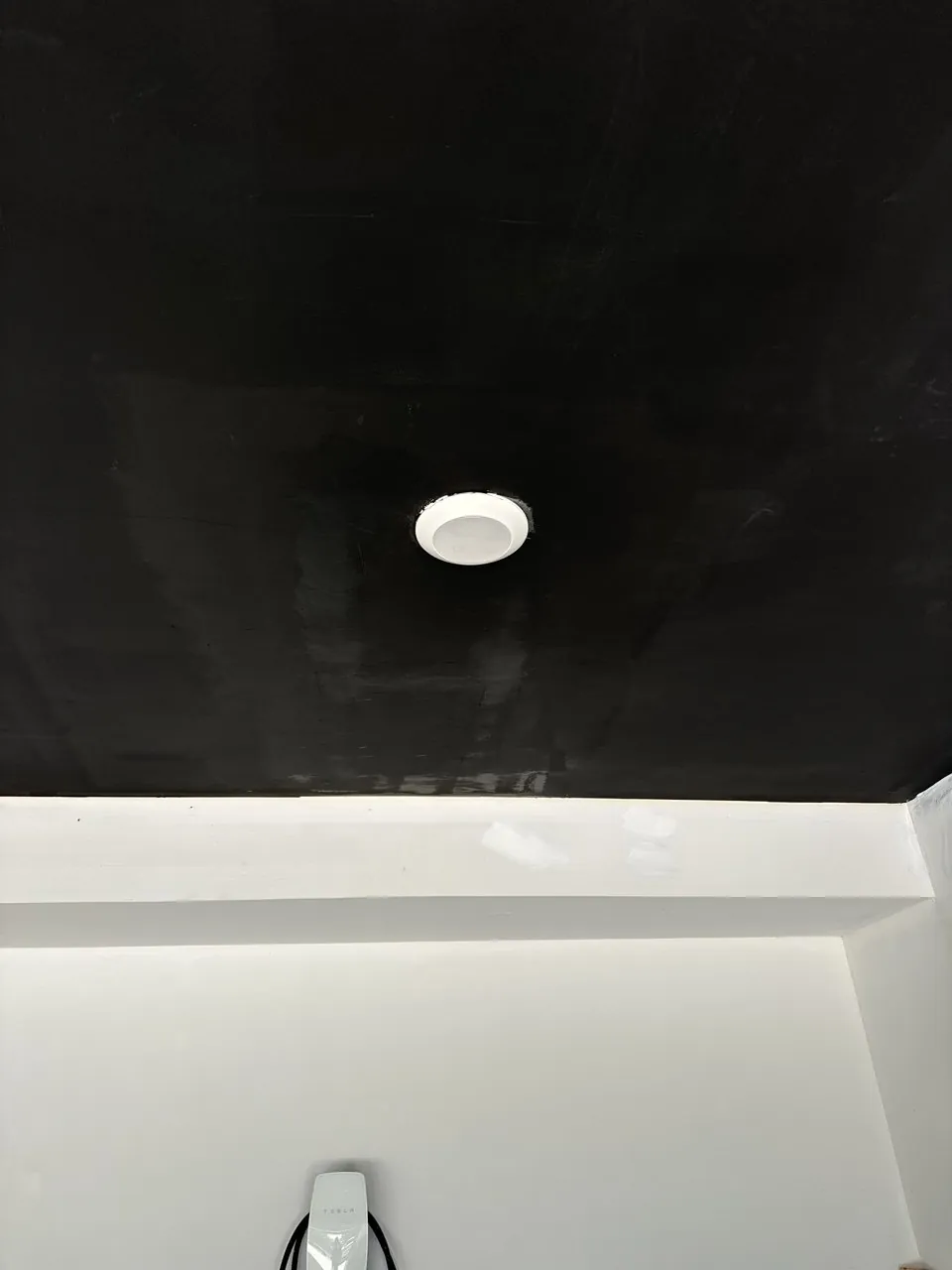
What drywall repair costs in Los Angeles
Most jobs land between $120 and $350. Texture match drives the price here.
See the price breakdown
How to Mount a TV on the Wall
Most of the holes people patch came from a mount or a shelf. Getting the anchor into a stud the first time is the cheaper version of this guide.
Read the guideMore DIY guides
Fitting a fan-rated box usually means opening the ceiling first, so the patch is part of the job rather than a separate one.
You can diagnose a blocked gutter from the ground in about ten minutes.
Every guide we have written, and the point in each job where it is worth handing over.
How to Fix a Drywall Hole: FAQ
What's the difference between spackle and joint compound?
Spackle dries fast and is great for small holes; joint compound is better for larger patches and feathering wide areas.
Do I have to texture the patch?
If your walls have texture, yes: an un-textured smooth patch will stand out under paint.
How long does drywall compound take to dry?
Ready-mixed joint compound needs roughly 24 hours per coat, longer in cool or humid rooms. Setting-type 'hot mud' (20, 45 or 90 minute) hardens chemically on a timer and lets you recoat the same day, handy for multi-coat repairs.
When is a hole too big to patch?
There's no hard limit: even a 2-foot hole can be plugged with a backed drywall piece. But once damage spans multiple studs, or there's water damage, mold or crumbling board around it, replacing the section of drywall gives a flatter, more durable result than patching.
Get the next guide by email
New how-to guides and the seasonal checklist for LA houses. No sales emails.
We'll only use your email for the guides.