
Smoke and CO Alarms: When to Replace the Whole Unit
Turn your smoke alarm over. There's a date printed on the back, and it tells you more than the battery does.
Every smoke alarm approved for sale in California since 2015 has to show the date it was made, with a space beside it for the date it went up. NFPA 72, the national fire alarm standard, says to replace a smoke alarm ten years after that date. That goes for hardwired alarms and for the ones with a ten-year battery, and sooner if it fails the test button. Passing the test doesn't buy an old alarm more time.
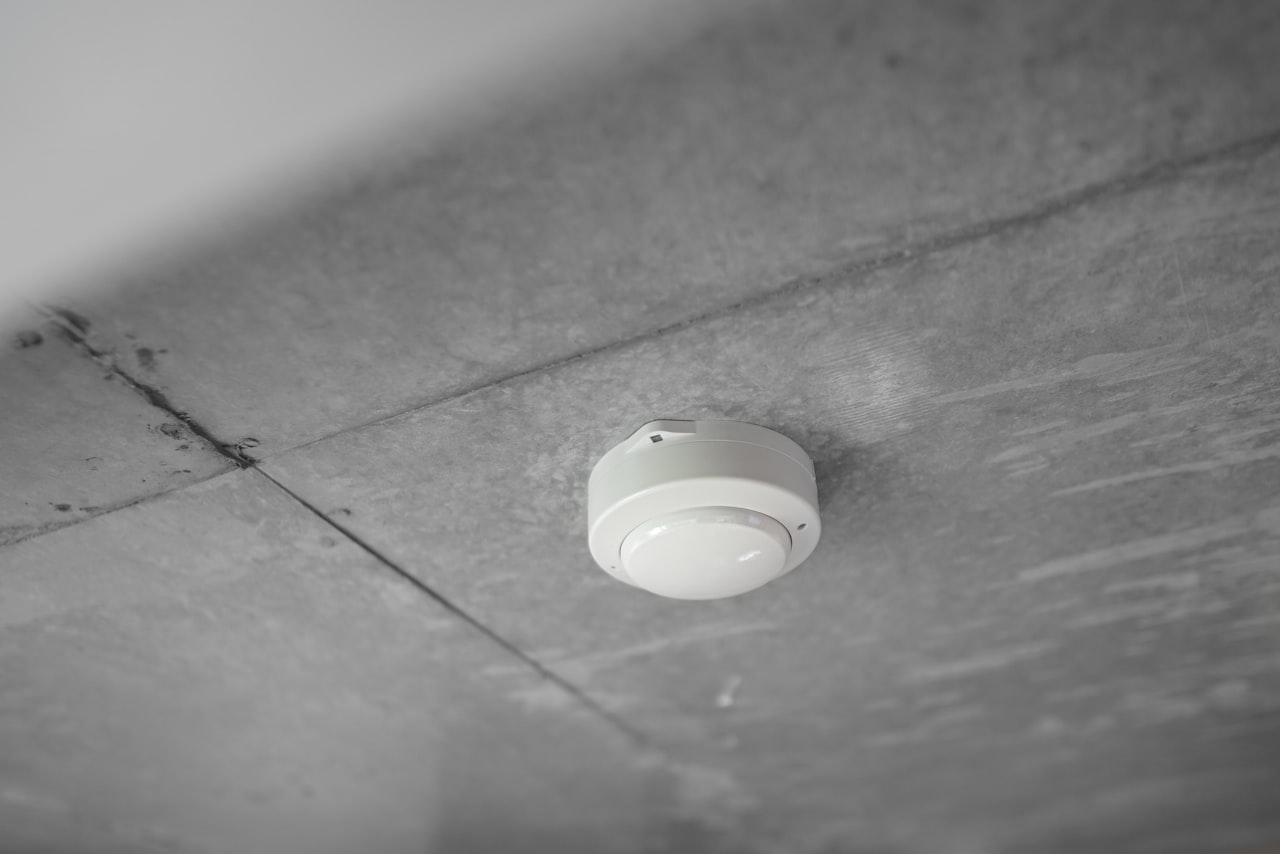
A smoke detector on a concrete ceiling.
Read the date first
Take the alarm off its base and find the date it was made on the label. Past ten years, a new battery won't save it.
Carbon monoxide alarms run out sooner. Most are made to last about seven years, because the sensor inside wears out. A combination smoke and CO alarm lasts seven to ten years depending on the model, and the label or the manual gives the number for yours.
Which kind you have
Look at how it's powered, because that decides what replacing it involves.
A battery alarm runs on cells you change yourself. Since July 2014, any new battery-only alarm California approves has to have a sealed battery built to last ten years.
With a sealed alarm, the battery can't come out. When it signals the end of its life, the whole unit is done.
Hardwired alarms are connected to the house wiring and often carry a backup battery too. Where the alarms are linked, one going off sets off the rest. Replacing one means working on the house wiring with the breaker off.
Where California wants them
Smoke alarms go in every bedroom, outside each sleeping area near the bedrooms, and on every level of the home. That's the California Residential Code, section R314.
CO alarms are required in any home with a gas appliance, a fireplace or an attached garage. The rule has covered houses since July 2011 and apartment buildings since January 2013. They go outside each sleeping area near the bedrooms, and inside a bedroom too if a gas appliance sits in that bedroom or its bathroom.
A combination smoke and CO alarm meets both rules in one unit.
What you can do yourself
Press the test button on each alarm, and read the date on each one while you're up there. An older alarm with a replaceable battery gets a new battery. One past its date gets replaced. For a battery or sealed alarm that's a stepladder job. The old one twists off its base, and the new one goes up where the rules above put it.
A chirp at 3 a.m. can mean a low battery or an alarm at the end of its life. The manual for your model says which pattern means which. Check the date before you buy a battery.
When it's house wiring
Hardwired alarms are where it stops being a quick job. The wires are live until the right breaker is off, so if you can't tell which breaker feeds the alarms, or the new alarm's plug doesn't fit the old one, stop there. Adding a wired alarm where there was never one means new wiring in the ceiling, and that's electrician's work. Replacing old hardwired alarms on the boxes already there is part of a smoke detector visit.
Tonight, take one alarm down and read the date on the back. If it's more than ten years old, check the others while the ladder is out.
Rather hand it over?
Tell us the job and your ZIP. You get one flat price to approve before anything starts.
Get an estimateRead next
What smoke detector installation costs in Los Angeles, and the guide that picks up where this one stops.
What smoke detector installation costs in Los Angeles
Most jobs land between $80 and $160. Wiring type decides this.
See the price breakdown
How to Install a Ceiling Fan
The other ceiling job on house wiring, with the same first move: the breaker off, and proven off, before you touch a wire.
Read the guideMore DIY guides
The rest of the October walk around the house, from the gutters down to the outdoor outlets.
You can diagnose a blocked gutter from the ground in about ten minutes.
Every guide we have written, and the point in each job where it is worth handing over.
Smoke and CO Alarms: When to Replace the Whole Unit: FAQ
How long does a carbon monoxide alarm last?
About seven years for most CO alarms, and seven to ten for a combination smoke and CO unit, depending on the model. The label or the manual gives the figure for yours.
Do apartments in California need CO alarms?
Yes, if the building has a gas appliance, a fireplace or an attached garage. Apartment buildings have been covered since January 1, 2013, and the alarms go outside each sleeping area near the bedrooms.
Can I put a new battery in a sealed alarm?
No. The battery in a sealed alarm can't be taken out, so when it reaches the end of its life the whole alarm gets replaced. Ten years from the date on the back, any smoke alarm is due anyway.
Get the next guide by email
New how-to guides and the seasonal checklist for LA houses. No sales emails.
We'll only use your email for the guides.