
A Drafty Door in LA? Find the Gap, Then Seal It
Turn off the hall light on a sunny afternoon and look at your front door from inside. If you can see a thin line of daylight down the latch side or under the bottom, air has been coming through there all year. The first storm will show you whether water does too.
Here the summer hides it. Downtown Los Angeles averages two hundredths of an inch of rain in July, then nearly two and a half inches in December and more than three in January and again in February. A worn seal goes unnoticed from April to November, and then it's a damp line on the floor inside the threshold. October is the month to find the gap, while the wood is dry and the adhesive will stick.
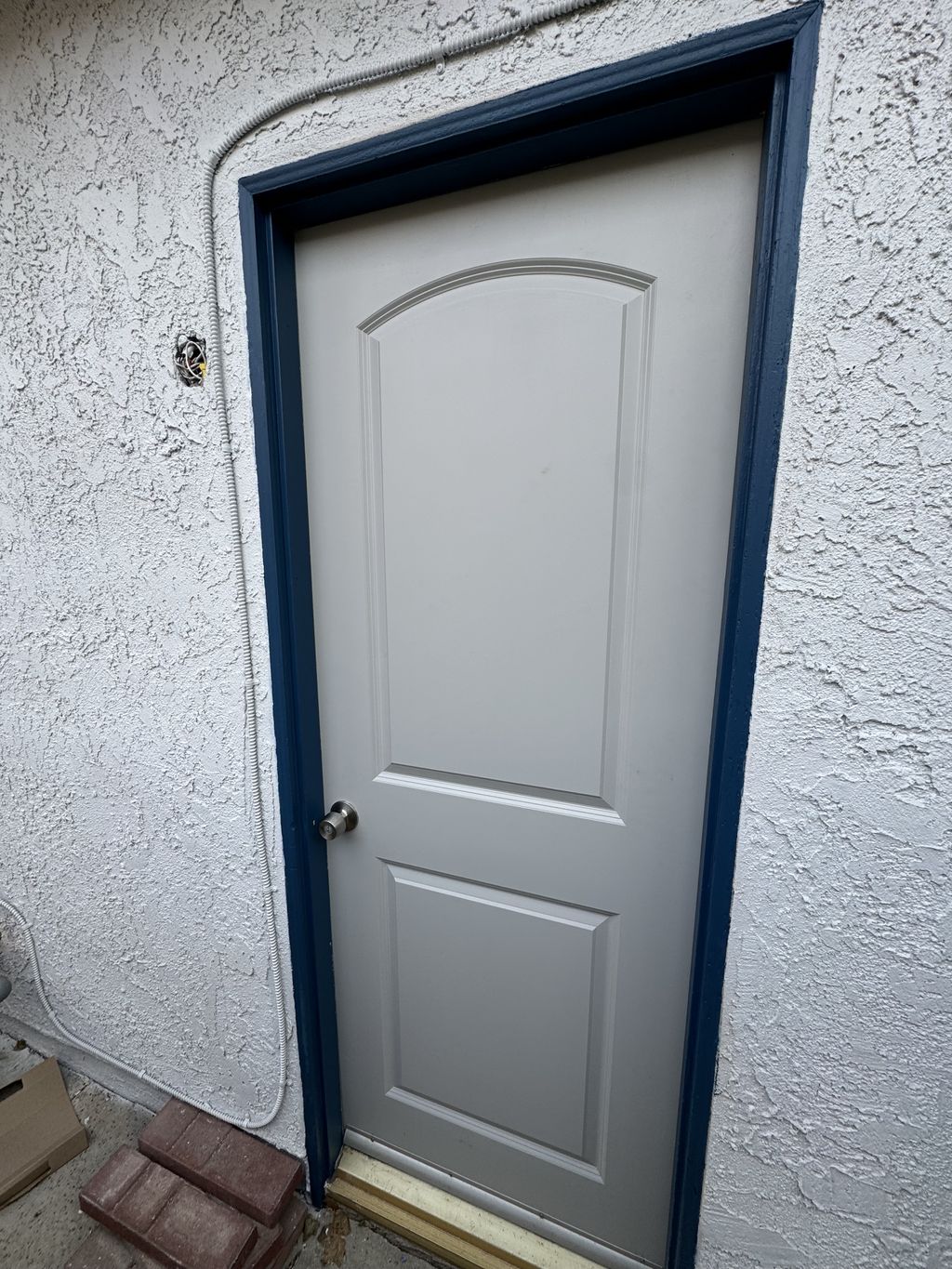
A door set in textured stucco, with its frame painted dark blue.
Find where it gets in
Start with the daylight test above, then try a dollar bill. Close the door on it at a few spots along the top, both sides and the bottom, and pull. Where the bill slides out with no drag, the seal isn't touching. Where it drags, it's working. On a windy day there's one more trick. Hold a lit incense stick near the edges of the door, and if the smoke blows sideways you've found a leak.
Then look at the floor. A gray tide line on the wood just inside, bare or darkened wood on the threshold, or a stain at one bottom corner of the jamb tells you rain has been getting past the bottom seal. Push a screwdriver into any darkened wood there. If it sinks in, read the last section before you buy anything.
Check how the door hangs first
A seal can only close a gap that stays the same size. If the gap is wide at the top of the latch side and tight at the bottom, or the door rubs in one spot, the door has dropped on its hinges or the frame has moved. New weatherstrip on a door like that makes it bind harder and wears through by summer. Our guide to a sticking door covers the long hinge screws and the strike plate, so fix the swing first and come back here.
The sides and the top
Pull back the old weatherstrip at a top corner and see how it's held. Most newer doors have a slot, called a kerf, cut into the jamb, and the seal is a strip of foam wrapped in vinyl, or a silicone bulb, with a barbed fin that presses into that slot. Older doors in a lot of LA bungalows have no kerf at all.
For a kerf door, take a short piece of the old strip to the store, since profiles differ. Clean the jambs and fit the piece across the top first. Then measure each side and cut the strip an eighth of an inch shorter. Start at the top and press the fin into the slot all the way down.
Without a kerf, an adhesive V-strip is the afternoon job. Fold it along the scored line, adhesive on the outside, and stick it to the door stop across the top and down the latch side. On the hinge side it goes on the frame next to the stop. It has to compress into a V as the door closes. Wipe the wood clean and dry first, and near the coast pick a dry afternoon after the marine layer has burned off.
The bottom of the door
The bottom is where the rain comes in, and it has two parts. The threshold is the strip you step over. A sweep or door bottom is the rubber or vinyl seal on the door itself.
Look at the top of the threshold for small round plugs, a few along its length. Under them are screws that raise and lower the cap. Turn each one the same small amount, then try the dollar bill under the door again. You want drag, not a door you have to push shut.
A fixed threshold with a gap above it gets a sweep instead. A screw-on sweep mounts on the inside face of an inswing door, and the slots in it let you set it low enough to touch without dragging on a rug. If the old door bottom slides into a channel under the door, the replacement slides into the same channel.
Caulk at the trim
Walk outside and look where the door trim meets the stucco. A crack along that joint lets wind-driven rain behind the trim, where nobody sees it until the wood goes soft. Cut out loose caulk, wipe the joint, and run a new bead of exterior sealant that you can paint. Do the same at the bottom corners where the jamb sits on the threshold. Never caulk anything that moves, like the door edge or the weatherstrip itself.
When it needs more than an afternoon
Weatherstrip, a sweep, a threshold adjustment and a bead of caulk are a fair Saturday for most people. It's a bigger job when the screwdriver sank into the threshold or the bottom of the jamb, when the floor inside is soft, or when the gap changes size from season to season because the frame is out of square. A rotted threshold has to come out, and a racked opening gets reset before any seal goes on. That's a door repair first and a new seal second.
Before the first storm, close your door on a dollar bill at the bottom corner on the latch side and pull. That one test tells you which part of this guide you need.
Rather hand it over?
Tell us the job and your ZIP. You get one flat price to approve before anything starts.
Get an estimateRead next
What weatherstripping costs in Los Angeles, and the guide that picks up where this one stops.
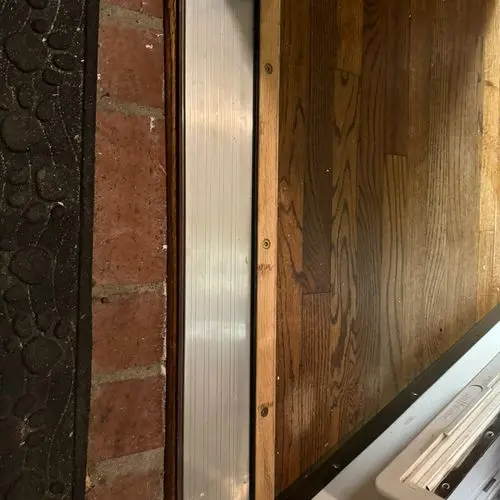
What weatherstripping costs in Los Angeles
Most jobs land between $90 and $200. Count of openings drives this.
See the price breakdown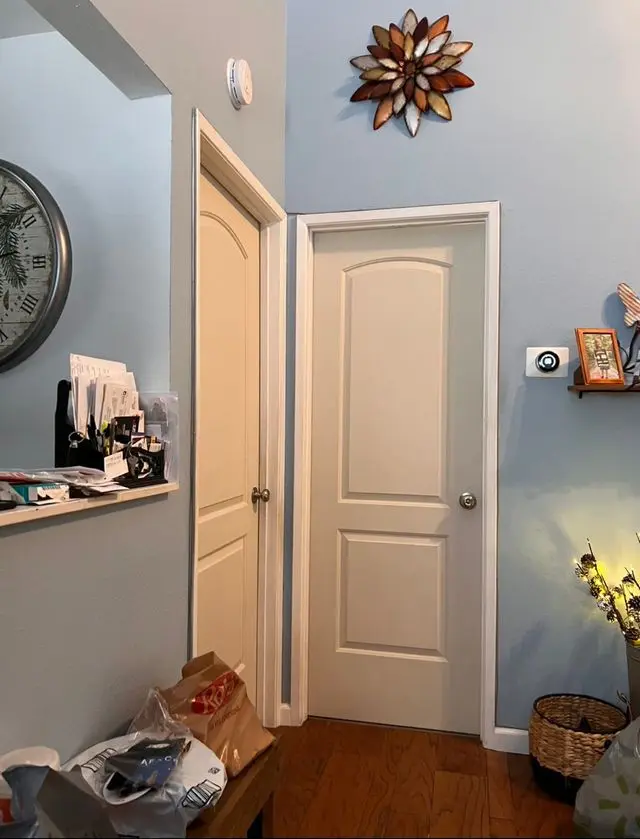
How to Fix a Door That Sticks in Winter
New weatherstripping on a door that already binds makes it worse. That guide sorts out the hinges and the strike first.
Read the guideMore DIY guides
The rest of the October walk around the house, from the gutters down to the outdoor outlets.
You can diagnose a blocked gutter from the ground in about ten minutes.
Every guide we have written, and the point in each job where it is worth handing over.
Get the next guide by email
New how-to guides and the seasonal checklist for LA houses. No sales emails.
We'll only use your email for the guides.